
Impact
Measured, reported, audited
Every output is documented and evaluated annually against targets, with records retained for audit and shared with our board and funders.
Measures of success
The numbers we report on
0/yr
Quarterly workshops on climate adaptation
0
Trees targeted per year
0+
Schools & communities engaged
0
Provinces in scope
Tracked indicators
- Training workshops held & youth groups trained
- Awareness meetings in communities and schools
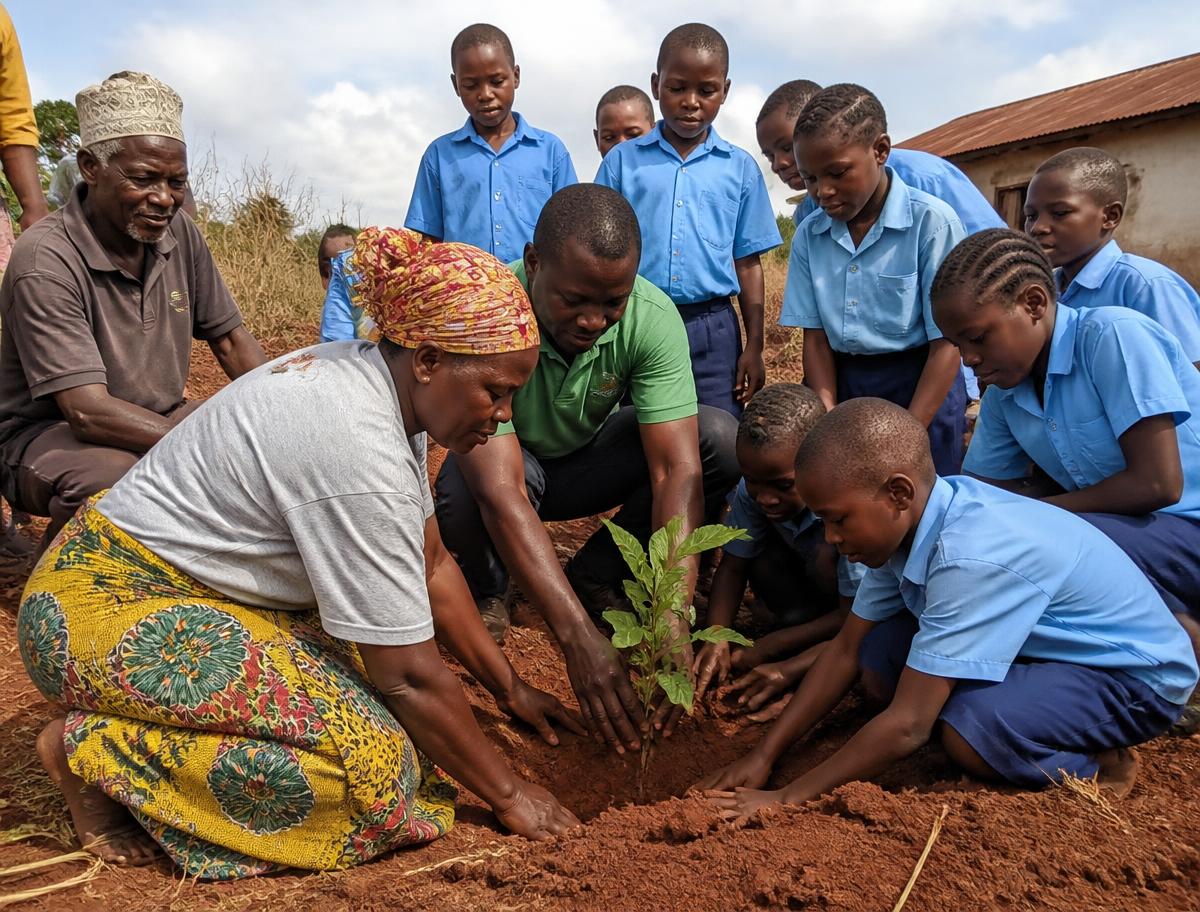
- Trees planted at schools and households
- Environmental clubs formed & learners involved
- Behavioural change indicators
- Users of kernel-charcoal energy products
Expected output
What each programme year delivers
Four quarterly workshops each year on sustainable economic activity and climate adaptation
Annual youth training cohorts in nursery management, budding and grafting
Millions of trees planted annually — fruit and other species
Agroforestry adoption for sustainable wood product provision
Increased household income through fruit surplus sales
Kernel-charcoal clubs formed as a charcoal alternative
School environmental clubs formed and sustained
Long-term impact & sustainability
Built to outlive the funding cycle
Long-term impact
- Improved living standards, reduced poverty and better community health
- Increased tree cover with reduced air and water pollution
- Fewer floods and reduced drought exposure
- Growth in kernel-charcoal processing clubs
- Rising school environmental club participation
Sustainability
- Youth ownership and mastery of practical skills
- Checks and balances through community and youth involvement
- Environmental clubs ensuring generational knowledge transfer
- Community and school ownership of local projects
- Government backing through ZEMA, ZNFA and relevant ministries
Risks & assumptions
What could go wrong, and how we plan for it
Funders and government partners deserve the full picture, not only the best case.
Continuous follow-up visits, demonstration plots and club structures keep new practices socially reinforced rather than dependent on one trainer.
Species selection is matched to district conditions, and planting calendars are set with agricultural extension partners.
Partnership with ZNFA and ZEMA gives communities a route to enforcement and legislative protection.
Clubs are kept deliberately small and manageable, with their own training plans and elected leadership.
Community interest in sustainable methods; favourable social, economic, political and weather conditions; and continued alignment with Global Giving partnership terms.

Join the movement
Help us reach £900,000 on Global Giving
Every contribution plants trees, trains youth and builds climate resilience in Zambian communities. Your support funds a 5-year transformation towards a $1,000,000 program goal.
Make a Donation
Currency
Select amount
Frequency
Secure payment · All currencies accepted · Tax receipt available