
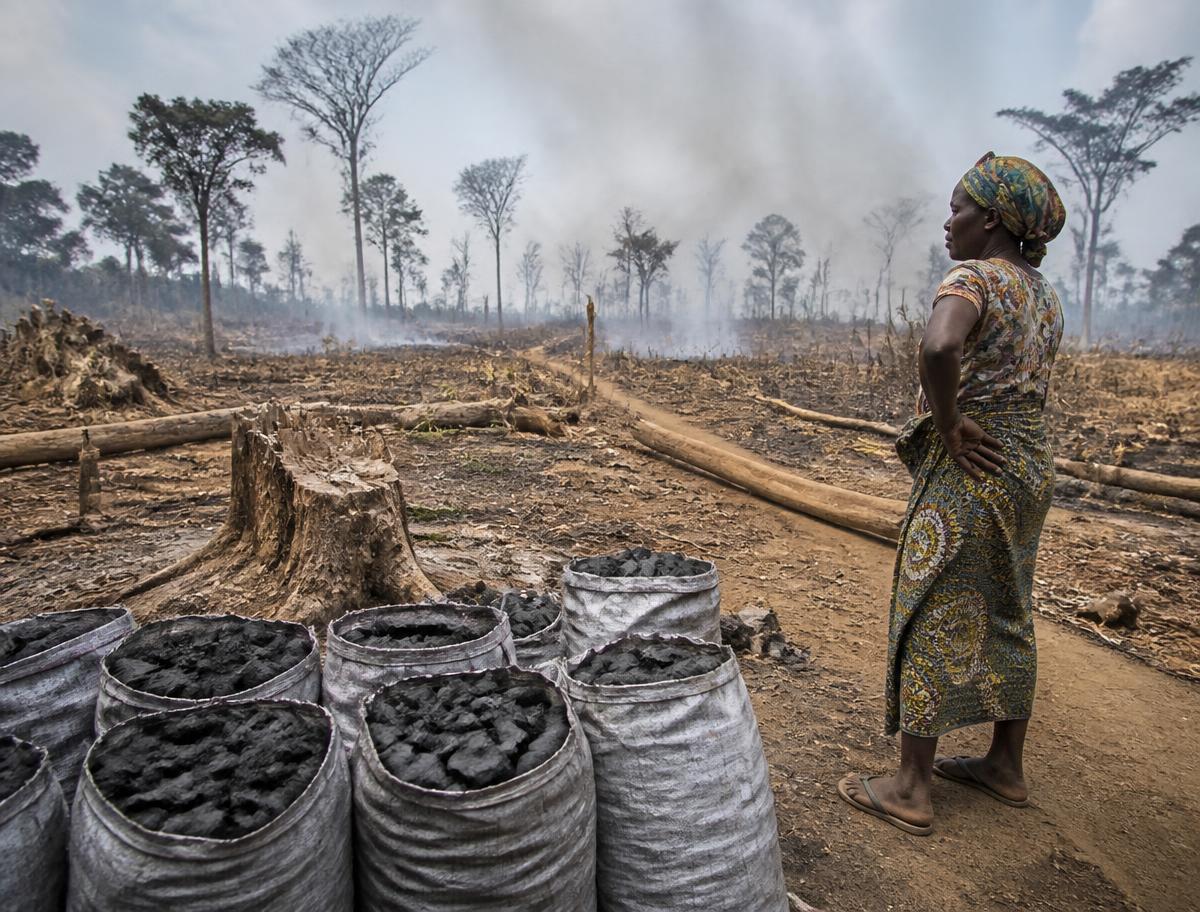
The problem
Human survival in Zambia is tied directly to the natural environment
Across rural Zambia, everyday economic activity degrades the very habitat communities depend on. The cycle is well documented — and it is reversible.
Cause and effect
A cycle that feeds itself
Each stage makes the next more likely. Breaking the cycle requires acting on livelihoods, knowledge and land use at the same time.
Stage 01
Unemployment drives extraction
With few alternatives, households turn to firewood, charcoal and timber for daily income — accelerating the charcoal and timber trade.
Stage 02
Extreme deforestation
Green cover falls, greenhouse gas concentrations rise, and habitats that support rural survival are degraded season after season.
Stage 03
Land and water degradation
Bush burning, fertiliser overuse and encroachment onto water body banks deplete soils and pollute the open water sources communities drink from.
Stage 04
Human health consequences
Polluted air, soil and water are linked to hormone, nervous and immune system disruption — compounding extreme poverty with no alternatives.
Why awareness matters
Lack of knowledge is itself a danger
Low levels of environmental education lead to poor agricultural practice — bush burning, fertiliser overuse and cultivation right up to river banks. Soils are depleted, yields fall, and more forest is cleared to compensate.
Communities are rarely told how these choices connect to the water they drink, the air they breathe or the illnesses they live with. UCA's first intervention is therefore always information.
Our response
An action-oriented approach that informs, sensitises and empowers youth and communities to take responsibility for their ecosystem — and to see themselves as its custodians for future generations.
See our approach